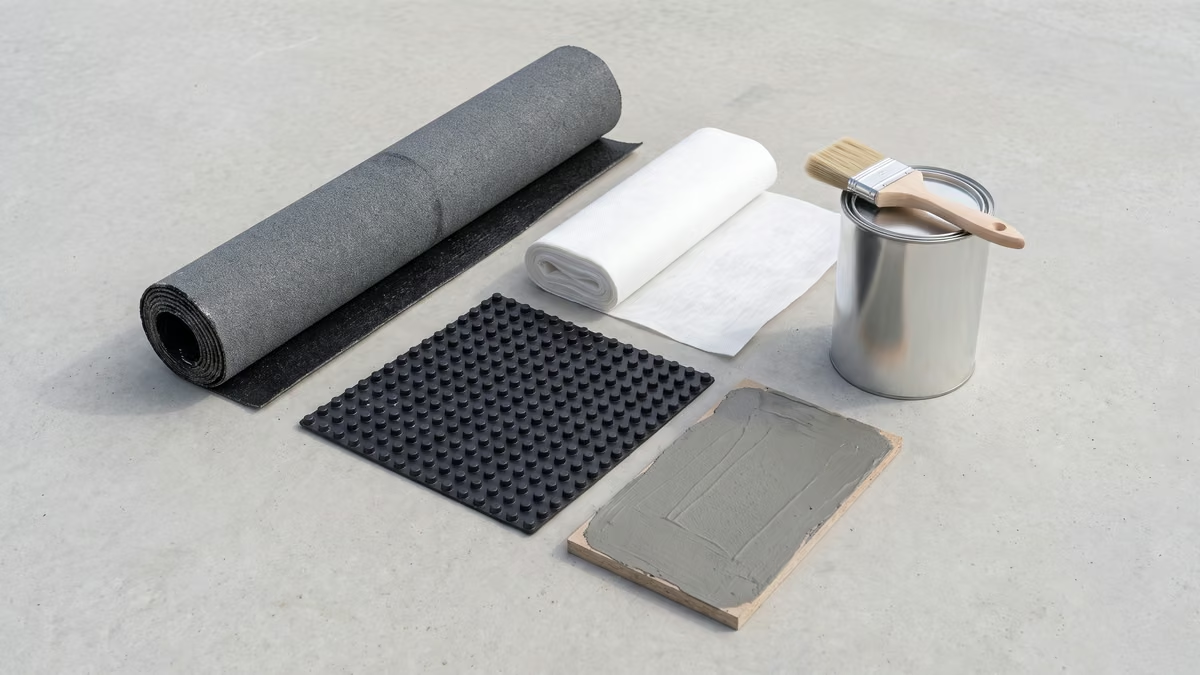
The nine systems
Torch-on bituminous membrane
Rolls of APP or SBS-modified bitumen melted onto a primed concrete deck with a gas torch. The default for flat concrete roofs in Cape Town. 15–20 year service life when laid two-layer with correct 100mm side laps and 150mm upstands.
Used for: Flat and low-pitch concrete roofs, gutters, parapet detailing — see torch-on waterproofing
Liquid-applied acrylic membrane
A fibreglass-reinforced acrylic coating rolled on in three passes. Seamless, so it handles awkward penetrations and detail work well. Typically 8–12 years before a re-coat, less on a roof that ponds.
Used for: Complex roof shapes, re-coats, gutters, small areas — see waterproofing systems
Polyurethane (PU) membrane
Higher-elongation liquid system that tolerates movement and UV better than acrylic. Costs more; worth it on decks and balconies that flex and get walked on.
Used for: Balconies, decks, podiums, trafficable surfaces — see balcony and deck waterproofing
Under-tile membrane
A breathable sheet laid under the battens on a pitched tile roof, draining any water that gets past the tiles out to the gutter. It is a secondary barrier, not the waterproofing — the tiles are still what keeps the rain out. On older Cape Town roofs it is frequently missing or has perished to dust, which is why a slipped tile turns straight into a ceiling stain.
Used for: Pitched tile and slate roofs, re-roofing, storm-damage repairs — see roof waterproofing in Cape Town
Cementitious slurry and tanking
A cement-based coating that becomes part of the substrate rather than sitting on it. Works under hydrostatic pressure, which coatings do not.
Used for: Basements, retaining walls, water features, planter boxes — see basement and cellar waterproofing
Bonded sheet membrane for wet areas
A thin flexible sheet bonded under the tile bed, taped at every corner and penetration. The only correct way to waterproof a shower — waterproofing paint under tiles is not a system.
Used for: Showers, bathrooms, laundries, kitchens — see shower waterproofing
Chemical damp-proof course (DPC) injection
A silane/siloxane cream or fluid injected into a drilled course of mortar, forming a horizontal barrier that stops capillary rise. Only treats rising damp — nothing else.
Used for: Rising damp in solid masonry walls — see damp proofing in Cape Town
Cavity drain membrane
A studded HDPE sheet that does not try to hold water back — it lets it drain to a channel and a sump. The reliable answer where the water table is high.
Used for: Basements, cellars, below-ground conversions — see basement and cellar waterproofing
Breathable façade water repellent
A penetrating silane cream that stops wind-driven rain entering porous plaster or face brick while still letting the wall dry outward. Sealing a damp wall with a non-breathable coating traps the moisture and blows the plaster.
Used for: Exposed elevations, face brick, porous plaster — see wall crack repair and façade sealing
Matching the system to the problem
| Problem | Correct system | Wrong but commonly sold |
|---|---|---|
| Flat concrete roof leaking at laps | Two-layer torch-on | Liquid re-coat over the failure |
| Rising damp in a solid wall | Chemical DPC + replaster | Damp-proof paint |
| Wind-driven rain through plaster | Crack repair + breathable repellent | Non-breathable sealer |
| Shower leaking into the next room | Bonded sheet membrane under tiles | Re-grouting the tiles |
| Basement wall wet under pressure | Cavity drain membrane or tanking | Waterproofing paint inside |
| Balcony leaking below the tiles | PU membrane + corrected falls | Sealing the tile joints |
| Water pooling against the foundation | French drain and sump | Waterproofing the wall |
Related services
Common questions
What is a waterproofing membrane?
A continuous barrier bonded to a structure to keep water out. It comes in three broad forms: sheet membrane that is rolled and heat-welded or self-adhered, liquid membrane that is brushed or sprayed on and cures into a seamless film, and cementitious slurry that is trowelled on and becomes part of the substrate. Sheet is the most durable, liquid handles complicated shapes best, and cementitious is the only one of the three that resists water arriving under pressure.
What is the best waterproofing system?
There isn't one — there is a correct system per application. Two-layer torch-on for flat concrete roofs, bonded sheet membrane for showers, cavity drain membrane for basements, chemical DPC for rising damp. A contractor who recommends the same product for all four is selling stock, not a solution.
What is the difference between waterproofing and damp proofing?
Waterproofing resists water under pressure and is designed to keep liquid water out entirely. Damp proofing resists moisture transmission through a structure — capillary rise and vapour. A DPC stops damp rising; it would not hold back a metre of standing groundwater.
How long does each system last?
Two-layer torch-on 15–20 years, polyurethane 10–15, liquid acrylic 8–12, liquid rubber re-coat 5–8, cementitious tanking effectively the life of the structure if it is not cracked, chemical DPC 20+ years. Ponding water reduces every one of these figures.